


Varicose veins of the legs are a rather dangerous disease for people, and not just a bluish cosmetic defect.This can lead to significant consequences for the patient's health, so it is very important to fully understand all aspects and details of the course of this disease.Having the right information can help in conducting treatment and pay attention to some characteristic nuances of the disease.
General characteristics and causes of varicose veins
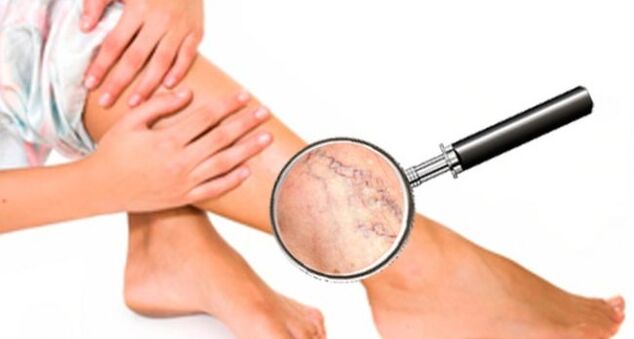
Varicose veins are persistent significant changes in the walls of the blood vessels of a person's lower limbs.The mechanism of deformation involves an increase in pressure in that part of the body.This happens because, in some cases, certain disorders prevent the normal ascent of venous blood from a person's legs to the heart.The compensatory function of the body helps to overcome obstacles by increasing the pressure level in the vessels and pushing the blood upwards.
As a result of changes in the functioning of blood vessels, valvular insufficiency develops in the lower limbs.It is characterized by the flow of blood from the deep veins to the superficial ones.Over time, due to high pressure, the walls of blood vessels lose their elasticity, which in turn leads to their stretching and thinning.Then, changes are noticed on the surface of the skin of the lower extremities, which appear as bluish or cyanotic nodules.
Varicose veins on the legs is a disease that affects not only the legs, but also the entire cardiovascular system.This disease can lead to patient disability and even death.With this in mind, you need to know why varicose veins appear.The reasons for this process are as follows:
- Increasing the level of progesterone in a woman's body.This hormone adversely affects the condition of blood vessel walls and valves.They become quite weak and unprotected.
- Some congenital anomalies and pathologies of blood vessel walls or valves.This may be due to poor vein conduction or lack of connective tissue function, which also causes varicose veins.
- Some neoplasms, both benign and malignant.They affect the appearance of the disease not only when they are localized on the lower limbs, but also in the abdominal cavity.
- Various injuries, bruises and damage to the legs.
- Various endocrine diseases.
- Thrombophlebitis is venous thrombosis with an inflammatory process affecting the walls of blood vessels.
- Some joint diseases.These mainly include osteoporosis and rheumatoid arthritis.
- Taking certain hormonal drugs.
- A sedentary lifestyle.This passive behavior of a person becomes the cause of congestion in the legs.
- Increased pressure in the intra-abdominal area.It most often occurs due to persistent constipation or some lung problems of a person.
- Excess body weight.As a result, the lower limbs are stressed too much.
- Wearing the wrong shoes and clothes.First of all, this applies to narrow items of the wardrobe.
- Poor nutrition with a predominance of high-calorie and fatty foods and an almost complete lack of vegetable fiber.
- Some unfavorable habits such as smoking and drinking alcohol.
Signs of varicose veins appear due to all the above reasons.Therefore, people who are at risk should be extremely careful about their own health.
The first symptoms and signs of varicose veins
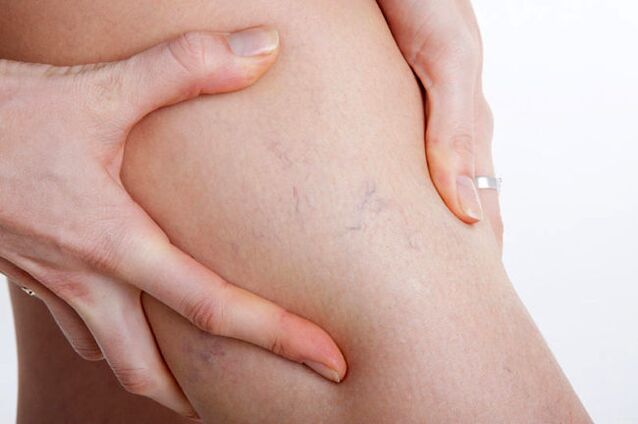
In order to pay attention to the disease in time, it is worth understanding what are the signs of varicose veins on the legs.The following symptoms should be noted:
- The appearance of pain in the legs.In addition, it may have a different nature of occurrence.When walking, painful sensations are most often throbbing and hot, while in a calm state the pain is painful.
- Occurrence of seizures at night while sleeping or lying on the bed.
- The manifestation of some changes on the skin of the limbs.They present dark spots, nodules and swelling.The skin is quite dry.These signs of varicose veins in the legs indicate that certain changes have already occurred in the blood vessels.
- A feeling of heaviness in the legs.The sick person may feel some swelling that comes from the inside.Most often this happens in the evening after prolonged activity.
- Thickening of the veins of the lower extremities.They can appear from under the skin, creating a fairly clear pattern of their location on it.
The first signs of varicose veins on the legs should be a factor that prompts a person to go to a medical facility.The longer the patient delays, the more the disease will progress.This, in turn, will affect the intensity of symptoms and the complexity of treatment.
Over time, varicose veins acquire quite serious symptoms.They represent extensive eczema and trophic non-healing ulcers.In severe cases, they can turn into gangrene.If varicose veins in the legs are not treated, the progression of the disease can even lead to limb amputation.This will be necessary to prevent blood poisoning through open wounds.
However, the most dangerous consequence of the disease is still the formation of blood clots.They can get into any part of the human body, blocking the blood flow there.As a result, strokes and heart attacks occur, leading to death.
Methods of treatment of the lower limbs
Varicose veins of the legs are currently treated in different ways.The following methods of combating the disease can be distinguished:
- Conservative.Most often, this method is used in the early stages, when the first signs of varicose veins on the legs have just appeared.
- Sclerotherapy.Doctors recommend this vein treatment in cases where conservative methods have failed.
- Surgically.Surgery, as a method of removing varicose veins on the legs, is indicated in cases where the disease threatens the patient's life.
In addition to the above methods of treatment, experts recommend arranging leg veins through diet and appropriate gymnastic and physiotherapy procedures.Only an integrated approach can give a really good result and get rid of the disease.
Creams and ointments
One of the most popular ways to treat varicose veins damaged by varicose veins is the application of various creams and ointments to the skin of the legs.This local therapy is quite safe for human health.It rarely causes side effects and has few contraindications.
Doctors recommend the use of the following drugs in case of varicose veins:
- Means that have a dissolving property, preventing stagnation and the formation of blood clots.The main active component of such drugs is a natural anticoagulant.
- Products based on venoactive components.The action of these drugs is to reduce pain and strengthen blood vessels.Their main components are horse chestnut, melon and butcher's broom.
- Nonsteroidal drugs.These drugs have an anti-inflammatory effect.
- Products based on glucocorticosteroid hormones.These drugs have very good anti-inflammatory and antihistamine effects, while having many side effects and contraindications.
Varicose veins have different symptoms, based on which it is worth choosing drugs.This should only be done by a qualified professional.
Drug treatment

Often, the effect of local drugs must be supported by systemic therapy.It consists of taking drugs from the following groups:
- Venotonics.The action of these means is based on improving the elasticity of the walls of blood vessels, restoring tissues and improving blood circulation.
- Anticoagulants.These drugs reduce blood clotting, preventing the formation of blood clots and blood clots.
- Antiplatelet agents.Such drugs are used in case of blood clots.
Varicose veins in the legs should be treated only in accordance with the symptoms they caused.The doctor should prescribe medicines after examining the patient.It is strictly forbidden to conduct therapy alone.
Sclerotherapy
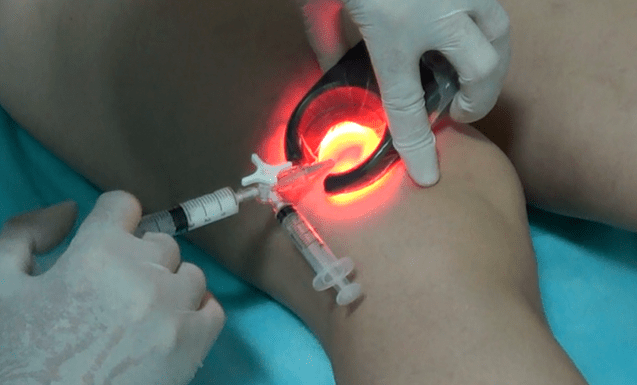
Varicose veins in the legs can be eliminated by treatment using a method such as sclerotherapy.This involves injecting a special medicine into a sick person's vein.It has properties that affect the sclerosis of the vascular walls.Through this effect, they stick together, causing the blood to stop moving.That is, in this way, the vein damaged by the high pressure is essentially blocked.
Sclerotherapy is performed only under local anesthesia.No general anesthesia is required for this procedure.The doctor should then place an appropriate bandage on the patient's leg.In order to consolidate the positive results achieved by this treatment, in the future the patient should wear a special compression garment.Without it, relapses of the disease can occur.
Laser therapy
Recently, some specialists are using a laser to treat veins.The essence of this method is the thermal effect on the walls of the damaged vessel to close its lumen.This treatment is performed on an outpatient basis, which means that the patient can return home immediately after the procedure.
Before treating veins with a laser, you should know that this method does not allow you to completely get rid of the disease on your own.The patient will have to undergo additional treatment.Often after laser therapy, compression garments are prescribed, in which the blood vessels do not dilate.
Surgical intervention
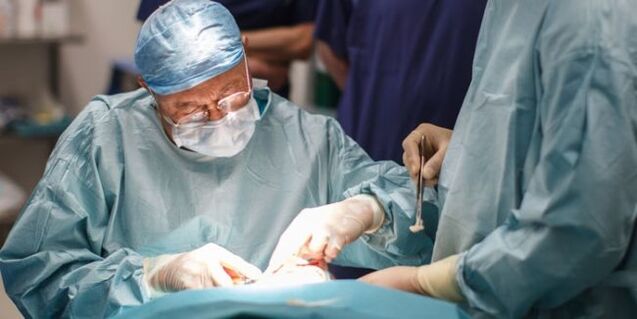
Varicose vein operations are performed only in cases where other treatment methods have not given a positive result.That is, such therapy for a disease is a necessary measure for the most pronounced signs of the disease, when the patient's life and health are at risk.
Doctors can do several different types of surgery depending on your specific situation:
- Three small incisions are made through which the damaged vein is removed.
- Pulling out the diseased vein through a single incision, followed by ligation of nearby vessels.
- A small skin incision to ligate the diseased vein in the area where the non-functioning valve is located.
- Complete removal of enlarged areas along with veins and nodes.Usually in such cases there are trophic ulcers that need to be cleaned.This type of operation is considered the most difficult.It is performed to save the patient's life.
In order not to bring the situation to a critical state, you should pay attention to all the signs of varicose veins on the legs.A timely visit to the doctor can save a person from the need for surgery.
Ozone therapy
One of the methods of influencing the damaged areas of blood vessels is ozone therapy.It is a new technique for treating spider webs.Its essence is that a small amount of ozone is introduced into the lumen of the vein through a needle, which sticks it together, blocking the blood flow.In this way, the damaged vein stops working and its functions are transferred to healthy vessels of the leg.
To achieve a good result from ozone therapy, only a few procedures are sufficient.Before treating varicose veins in this way, you should consult your doctor.
Phlebectomy
One type of surgical intervention to remove varicose veins on the legs is phlebectomy.This is an operation that involves several small incisions and removal of the damaged vein.
Immediately after the operation is completed and a special bandage is applied, the patient can go home.At the same time, he has to wear a special compression garment that tightens his leg for about a month.After some time, the wounds after the operation become almost invisible and do not represent any cosmetic defect of the skin.
Traditional methods of treating varicose veins

Varicose veins can be treated in different ways.Traditional medicine also helps a lot in this.Most often, his recipes should be used only in the early stages of the disease, because in other cases their use is ineffective.This is primarily due to the fact that as the disease progresses, its consequences can only be corrected with more radical measures.
We can highlight the following useful and satisfyingly effective recipes in some cases:
- An infusion of dried nettle leaves.To do this, they must be thoroughly crushed and filled with boiled water, after which the liquid must be poured into a thermos.It should be infused for about 30-40 minutes.Once this is done, you need to strain the liquid.You should take the "medicine" 1/3 cup three times a day, 1 hour after each meal.With varicose veins, such treatment helps only in the early stages, when there are no changes in the vessels.
- Mashed potatoes.This "medicine" mainly helps against ulcers caused by varicose veins.One potato should be finely chopped with the help of a grater, and then the resulting material should be placed on a wound of 1 cm. The paste should be covered with several layers of gauze on top, and after 4-5 hours the potato can be removed from the wound, replacing it with a new one.
- Decoction of hop cones.You will need one tablespoon of this medicinal ingredient.It is crushed and poured with 200 milliliters of boiling water, after which the liquid is boiled for about 15 minutes in a water bath.The resulting decoction should be taken three times a day, one cup before meals, and it can also be used to lubricate varicose veins on the legs.Some people make lotions based on a decoction of hop cones.
Before treating varicose veins with traditional methods, you should definitely consult your doctor.It is not possible to get rid of this disease in all ways, which is due to the individual characteristics of the body and the presence of certain complications that only a specialist can take into account.
Special underwear
Quite often, compression hosiery is used to maintain the lower limbs in the correct physiological state.This is a special anti-varicose underwear that has a healing effect on a person's legs.
The mechanism of action of knitwear involves the redistribution of blood flow from damaged veins to healthy ones.This helps to improve the nutrition of nearby tissues and increase blood circulation.
When choosing underwear, it is very important to choose the right size.It is best to have your doctor or other professional help you do this.You should also make sure that you have learned all aspects of using compression hosiery.Quite often, the treatment of varicose veins should be carried out only when wearing such products.They speed up the healing process, thereby reducing the risk of blood clots.
Exercises for varicose veins
Some physical exercises are quite effective in preventing varicose veins.They should be fairly moderate but intense.Separately, doctors recommend throwing your legs over your head, thus allowing the blood to drain from the legs.Positions where the lower limbs are higher than the level of the whole body have been found to be most effective for varicose veins of the lower limbs.
The following exercises are helpful:
- You need to rise on your toes so that your heels are 2 centimeters from the floor, then you need to sharply lower yourself onto your feet.Repeat this action at least 30 times.Once this is done, you can rest for about 10 seconds, after which you should repeat the lifts again.It is necessary to exercise in this way about 3-5 times a day.
- Taking a lying position, lift your right leg up.After releasing it, you should sharply shake your leg, after which you can place your foot on the floor.You need to repeat the same action with the left limb.This exercise will be beneficial if done 10 to 20 times.A sufficient number of approaches is from 3 to 5 per day.
Vibration gymnastics has also proven itself well.Before starting this treatment, you should consult your doctor.
Diagnosis
The first symptoms of varicose veins on the legs do not appear very clearly, so quite often patients seek help only in the later stages.In such cases, certain changes can already be seen on the skin.That is why the doctor can make a diagnosis only by an external examination of the patient's lower limbs;even a novice specialist can do this.But most often the diagnosis is not limited to this.Some additional research methods may be prescribed, among which the following should be highlighted:
- Ultrasound flowmetry or Doppler.These diagnostic methods allow you to determine the speed of blood flow, as well as the level of filling of blood vessels.
- Special samples.Their positive result may indicate the development of varicose veins even without external manifestations.
- Phlebomanometry.This diagnostic method determines the venous pressure in the vessels of the legs of a sick person.
- Vein scan.This method of examination allows the attending physician to assess the condition of the walls of blood vessels and valves.
- Phlebography.This procedure is quite invasive.This is due to the introduction of a special contrast agent into the bloodstream, which is recognized by X-rays.Moreover, such a study is as informative as possible.
- Echosclerotherapy.In order to undergo this research method, a special substance - a sclerosant - is injected into the patient's vein.The patient's legs are then scanned.
- Thermography.Such an examination with infrared radiation helps to assess the functionality of the veins of the lower extremities.
- Computer phlebography.This method is a relatively new and more modern analogue of conventional venography.
- Phleboscintigraphy.This test evaluates the veins and lymph nodes in a sick person's legs.They may also have certain changes that must be taken into account when prescribing treatment.In this case, radionuclides are used for visualization.
- Photoplethysmography.This method is based on the use of photodiodes.
With varicose veins, the patient may be prescribed to undergo one or two research methods, since many of them give similar results.A qualified doctor can draw conclusions after a routine scan.
Consequences and complications of advanced varicose veins
Varicose veins are a dangerous disease that leads to serious consequences and complications.Among them are the following:
- Acute stage of thrombophlebitis of superficial veins.
- Trophic ulcer.
- Phlebothrombosis.
- Chronic venous insufficiency.
In addition, in advanced cases, varicose veins contribute to significant blood clot formation.This can lead to strokes and heart attacks.If a blood clot breaks off from a vessel wall, it can cause death.
When to see a doctor and what
Varicose veins require treatment to be carried out as correctly and promptly as possible.It happens that a sick person does not seek help from a medical facility for a long time.This attitude towards your own health is not right.The patient cannot cope with the disease on his own.Only the phlebologist knows what to do with the disease and how to treat it.It is to this specialist that you should contact if varicose veins or varicose veins appear.When the vascular changes are too strong, the patient should be treated by an angiosurgeon.
The reason for diagnosis should be the first signs of varicose veins - swelling, feeling of fullness and pain.As soon as these symptoms appear, you should contact a specialist for an examination.
Prevention
In order not to wonder what varicose veins are and how to get rid of their consequences, you must strictly follow some preventive rules.Among them are the following:
- Correct structure of work and rest regimes.If possible, reduce orthostatic loads.
- Changing body postures during prolonged sitting.
- Abandoning the leg-to-leg pose.
- Kneading the feet.
- Constant walks in comfortable clothes and shoes.
- Keeping blood pressure at normal levels.
- Proper and balanced nutrition.
If you follow all the above simple rules, you can significantly reduce the risk of varicose veins or the progression of this disease to the appearance of complications.